Palestine Cinema Days Around the World
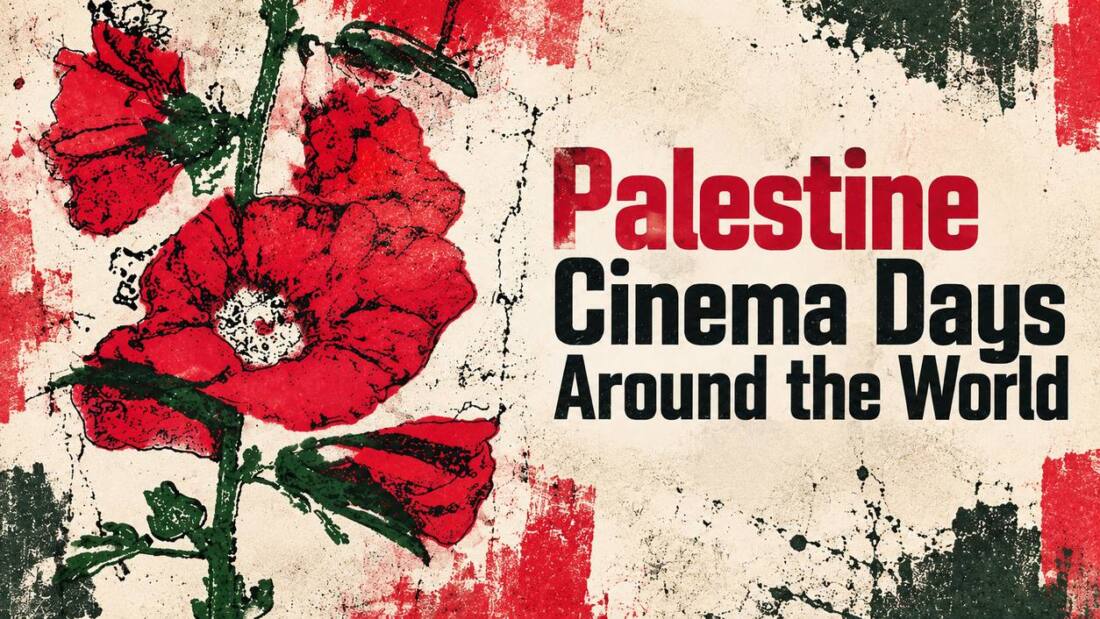
Palestine Cinema Days Around the World: Two Palestinian Films at Azimut
As part of the international initiative Palestine Cinema Days Around the World, Azimut will screen two films that approach Palestine from different periods and cinematic perspectives: Mohammad Malas’ documentary classic The Dream and Theo Panagopoulos’ short film essay The Flowers Stand Silently, Witnessing.
Palestine Cinema Days Around the World is a global initiative bringing Palestinian films and stories to audiences around the world on the same day. It was launched in 2023, after the tenth edition of Palestine Cinema Days was cancelled. Instead, 171 screenings were organised across 41 countries. The initiative has continued to grow, with more than 1,000 screenings taking place in over 80 countries in 2025. Its fourth edition will take place on 2 November 2026, marking the 109th anniversary of the Balfour Declaration.
Organised by Filmlab Palestine, the initiative creates a shared global screen through which Palestinian stories, memories and cinema can travel across borders.
The Dream — Mohammad Malas
The Dream (Al-Manam), made in 1987 and running for 45 minutes, grew out of interviews conducted by Syrian filmmaker Mohammad Malas in 1980 and 1981 with more than 400 Palestinian refugees living in camps in Lebanon.
Rather than asking only about their everyday lives, Malas asked them a strikingly simple question: What do you dream about when you sleep?
Following the Sabra and Shatila massacre in 1982, in which some of the people he had filmed were killed, Malas stopped working on the project. He returned to the material in 1986, shaping his extensive archive into a film that explores the Palestinian refugee experience through dreams, memories and personal testimonies.
The Flowers Stand Silently, Witnessing — Theo Panagopoulos
The Flowers Stand Silently, Witnessing is a 17-minute documentary essay by Theo Panagopoulos, released in 2024. The film begins with rare archival footage of Palestinian wildflowers shot by a Scottish missionary during the 1930s and 1940s.
Panagopoulos, a filmmaker of Palestinian heritage based in Scotland, transforms this rediscovered archive into a reflection on who is behind the camera, what the camera chooses to show, and what remains outside the frame.
The flowers become a starting point for a wider story about people, land and memory, and about the ways in which the moving image can preserve evidence of a place while simultaneously excluding the people who inhabited it. The film won the IDFA Award for Best Short Documentary in 2024.
Together, the two films presented as part of Palestine Cinema Days Around the World create a shared space for viewing and remembrance – one in which cinema becomes a way of preserving stories that might otherwise remain unseen or unheard.